
6 Best Post Emergent Weed Killer Products Reviewed
Keeping a pristine lawn or garden means battling the relentless invasion of weeds, and the choice of a post‑emergent weed killer can make the difference between a quick victory and a lingering headache. The right product not only targets stubborn broadleaf invaders while sparing your prized grasses, but also minimizes environmental impact, reduces re‑application costs, and protects the health of pets and children. With countless formulas on the shelves, it’s easy to feel overwhelmed, which is why we’ve cut through the noise to spotlight the six top‑rated post‑emergent weed killers on the market today. Read on to discover which options deliver fast, reliable results for every type of yard.
6 Must‑Try Post‑Emergent Weed Killers Reviewed
We’ve tested dozens of formulas, and these six stand out for effectiveness, safety, and value in tackling stubborn garden weeds.
6. Ortho WeedClear Lawn Weed Killer (32 oz)

Ortho WeedClear Lawn Weed Killer Ready‑To‑Spray makes weed control a breeze. The 32 oz. bottle is pre‑mixed and connects directly to your garden hose, so you can spray a uniform mist over the lawn in seconds. One application reaches the roots of common invaders—crabgrass, dandelion, clover, chickweed, foxtail and creeping charlie—leaving the surrounding grass untouched when used as directed. The formula is safe for a wide range of turf types, including Bermudagrass, Buffalograss, Fescues, Kentucky Bluegrass, Ryegrass and Zoysiagrass, and it treats up to 5,000 sq ft. Just turn the sprayer on, cover the weeds until the lawn is wet, and watch the unwanted plants die back fast. (Not available in FL, GU, HI, LA.)
Pros
- Fast‑acting, root‑level kill – eliminates weeds with a single treatment.
- Convenient ready‑to‑spray design – no mixing, just attach to hose and spray.
- Broad turf compatibility – safe for most common lawn grasses.
Cons
- Limited regional availability – cannot be purchased in Florida, Guam, Hawaii, or Louisiana.
- Requires active growth – best results when weeds are young and actively growing; mature weeds may need repeat treatment.
5. Scotts Halts Crabgrass Preventer

Scotts Halts Crabgrass & Grassy Weed Preventer is a pre‑emergent lawn shield that stops the most common summer and fall weeds before they even sprout. One 20.12 lb. bag covers up to 10,000 sq ft, making it ideal for medium‑ to large‑size yards. Apply the product to a dry lawn in early spring for summer‑season protection, or in the fall to block winter‑time invaders such as Poa annua, henbit, corn speedwell, and chickweed. The formula works on all grass types except Dichondra and Bentgrass, and it remains effective even if rain, snow, or a freeze occurs after application. By preventing germination of crabgrass, foxtail, spurge, barnyardgrass, moss (outside California), and many other listed weeds, Scotts Halts lets you enjoy a greener, healthier lawn with fewer herbicide touch‑ups throughout the growing season.
Pros
- Broad‑spectrum pre‑emergent control – stops both spring and fall weeds in one product.
- Weather‑tolerant – rain, snow, or freezing temperatures after application won’t diminish performance.
- Large coverage – a single 20.12 lb. bag treats up to 10,000 sq ft, offering great value for bigger lawns.
Cons
- Not suitable for Dichondra or Bentgrass – those grass types require a different preventive program.
- Requires timing – effectiveness depends on applying at the correct seasonal window (early spring or fall).
4. BASF Drive XLR8 Herbicide Concentrate

BASF Drive XLR8 Crabgrass Killer is a water‑based, ready‑to‑mix concentrate formulated with quinclorac to give you fast, reliable control of both grassy and broadleaf weeds. The innovative water‑based carrier promotes rapid plant uptake, so you see results quickly, while the 30‑day residual activity keeps crabgrass, foxtail, kikuyu, signal and torpedo grasses, as well as bindweed, clover, dandelion, black medic, and horseweed, at bay long after the first spray. It’s rainfast in under an hour, making it ideal for unpredictable weather. The product is versatile enough for residential lawns, golf courses, commercial properties, and any non‑residential turf site, and it’s labeled for both warm‑season and cool‑season grasses—just follow the label for mixing and application rates. Always read the label, wear the required PPE (long‑sleeve shirt, long pants, socks, shoes, and chemical‑resistant gloves), and observe any state restrictions (e.g., NY spot‑application only).
Pros
- Fast uptake & rainfast – water‑based formula delivers quick action and becomes effective in < 1 hour.
- Long‑lasting residual – up to 30 days of weed suppression reduces re‑application frequency.
- Broad‑spectrum control – tackles a wide range of grassy and broadleaf weeds on many turf types.
Cons
- Strict safety & PPE requirements – proper protective gear is mandatory for safe handling.
- State‑specific restrictions – some regions (e.g., New York) limit use to spot applications only.
3. Agrisel Sulfentrazone Weed Killer

Agrisel Sulfentrazone 4F Weed Killer is a powerful, dual‑action herbicide that works both pre‑emergent and post‑emergent, targeting weed seeds right as they germinate. Whether you’re battling crabgrass, creeping charlie, or a mix of over 100 other common weeds, this formula stops them before they take hold, keeping lawns, gardens, golf courses, roadside strips, and even pre‑planting crop rows pristine. The 8‑ounce “Tip‑and‑Pour” bottle makes application a breeze—just tip, pour, and spread the solution where it’s needed. Each purchase comes with a 3‑pack of disposable Agrisel protective gloves, so you stay safe while you work. The product is pet‑safe when used as directed, and its low usage rates mean you get an economical solution that scales from a small patch to larger landscapes. Choose the size that fits your project—8 oz, 64 oz, or 320 oz—though the sprayer is sold separately. Always read the label for proper usage and safety.
Pros
- Pre‑ and post‑emergent action eliminates weeds before they sprout and kills existing ones.
- Broad‑spectrum versatility suitable for residential lawns, commercial turf, roadside areas, and crop prep.
- Cost‑effective low application rates stretch the product farther, saving money on large jobs.
Cons
- The sprayer is not included; you’ll need to purchase a compatible applicator separately.
- As with any herbicide, strict adherence to label directions is required to avoid off‑target damage.
2. Prime Source Celsius WG Weed Control

Prime Source Celsius WG – 0.226 oz Easy‑Mix Packet is a professional‑grade weed‑control solution designed for the exacting standards of golf courses, yet simple enough for any homeowner. The pre‑measured packet eliminates guesswork: just add water, stir, and you’ve got a fast‑acting spray that targets dandelions, crabgrass, and a host of other tough weeds. Formulated for safe use on St. Augustine turf and many other lawn types, it delivers the same high‑performance results you’d expect from a commercial program, without the need for special equipment or measuring tools.
The blend works quickly, showing visible weed suppression within hours and complete control in just a few days. Its concentrated formula means a single packet covers a large area, making it both economical and environmentally considerate. Whether you’re maintaining a pristine fairway or clearing a backyard lawn, Prime Source Celsius WG gives you the confidence of a pro‑level treatment with the convenience of an easy‑mix packet.
Pros
- No measuring required – the ready‑to‑mix packet saves time and eliminates errors.
- Professional golf‑course quality – delivers fast, reliable control on high‑maintenance turf.
- Broad‑spectrum safety – safe on St. Augustine and many other grass species, reducing the risk of damage.
Cons
- Limited to small‑area applications – the 0.226 oz packet is best for spot treatments or modest lawns; larger properties may need multiple packets.
- Requires careful mixing – while no measuring is needed, proper dilution is essential to avoid over‑application.
1. Southern Ag Amine 2,4-D Weed Killer
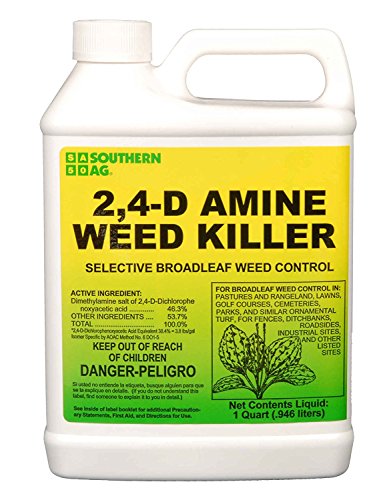
Southern Ag Amine 2,4‑D Weed Killer comes in a convenient 32 oz (1‑quart) container, perfect for spot‑treating or larger acreage. Its low, economical use rate—just 1 to 4 pints per acre—means you get maximum coverage while stretching your budget. Formulated to control a wide spectrum of broadleaf weeds and even woody plants, this herbicide works reliably in turf, pastures, rangeland, ditch banks, and around fence lines. Whether you’re maintaining a pristine lawn or managing unwanted vegetation on a farm, Southern Ag’s 2,4‑D delivers fast, consistent results without the need for multiple products.
Pros
- Cost‑effective application – the 1‑4 pint/acre rate reduces chemical spend and limits runoff.
- Broad‑spectrum control – tackles many common broadleaf weeds and woody seedlings in one spray.
- Versatile use zones – safe for turf, pastures, rangeland, ditch banks, and fence‑line areas.
Cons
- Limited to broadleaf/woody species – does not control grasses or certain tough perennials.
- Requires careful rate measurement – under‑dosing may reduce efficacy, while over‑application can stress desirable plants.
Buying Guide
When choosing a post‑emergent weed killer, the most important aspects are how quickly it targets active weeds, its safety for surrounding plants, and its long‑term effectiveness under your specific lawn or garden conditions.
- Active ingredients and spectrum – Look for formulations that list proven herbicides (e.g., 2,4‑D, dicamba, quinclorac) and confirm they cover the weed species you face without harming desired turf or ornamentals.
- Application method and coverage – Sprays, granules, or ready‑to‑use liquids each have different ease‑of‑use and drift potential; pick the one that matches your equipment and the size of the area you’ll treat.
- Safety and environmental impact – Check for low toxicity to pets, wildlife, and beneficial insects, and verify that the product meets local regulations and has a clear label for proper protective gear.
- Residual control and durability – Products that leave a residual layer can prevent re‑growth for weeks, but ensure the durability aligns with your maintenance schedule and climate.
- Value and reviews – Compare price per acre‑foot, read verified user feedback, and consider warranty or satisfaction guarantees to gauge overall cost‑effectiveness.
By weighing these factors—active chemistry, application convenience, safety, lasting performance, and real‑world value—you’ll select a post‑emergent weed killer that delivers reliable results while fitting your budget and garden needs.
Frequently Asked Questions
What is the best post‑emergent weed killer for a typical lawn?
Answer: For most cool‑season and warm‑season lawns, a selective post‑emergent herbicide containing 2,4‑D, dicamba, and mecoprop (MCPP) (often marketed as “broadleaf weed control”) is the most effective. It targets dandelions, clover, chickweed, and other broadleaf weeds while leaving grass unharmed. Look for products labeled for use on your specific grass type (e.g., Kentucky bluegrass, fescue, Bermuda, or St. Agrostis).
Which post‑emergent herbicide works best on tough weeds like crabgrass without damaging turf?
Answer: For grassy weeds such as crabgrass, quinclorac or a fluazifop‑p-butyl‑based product (e.g., “grass‑specific” herbicides) is ideal. These chemicals inhibit cell elongation in C₄ grasses, killing crabgrass while sparing most common lawn grasses. Always read the label to confirm compatibility with your turf species and follow the recommended application rate.
How often should I apply a post‑emergent weed killer for optimal control?
Answer: Most post‑emergent herbicides require 2–3 applications spaced 7–14 days apart to catch weeds at different growth stages. After the final treatment, wait at least 2–3 weeks before reseeding or applying a fertilizer that could stress the grass. For chronic weed pressure, a seasonal program (early spring, mid‑summer, and early fall) helps keep the lawn weed‑free. Always adhere to the product’s label regarding maximum annual usage.
Conclusion
In the end, choosing the right post‑emergent weed killer comes down to understanding your lawn’s specific needs, the types of weeds you face, and the environmental conditions of your garden. Opt for formulations that balance efficacy with safety, paying close attention to active‑ingredient compatibility, application timing, and proper dosage. Remember that even the most powerful chemicals work best when paired with good cultural practices such as proper mowing, watering, and soil health. By staying informed and following label instructions, you can keep unwanted weeds at bay while preserving the vitality and appearance of your landscape for seasons to come.