
7 Best Inverter Generator for Home Backup Power
When the lights flicker or a storm knocks out the grid, a reliable power source can be the difference between comfort and chaos, especially for essential appliances, home office gear, and medical devices. Choosing the right inverter generator for home backup isn’t just about wattage; it’s about quiet operation, fuel efficiency, portability, and clean power that protects sensitive electronics. With countless models crowding the market, it’s easy to feel overwhelmed by specs and marketing hype. In this post we cut through the noise, testing performance, durability, and value to present the top 7 inverter generators that consistently deliver peace of mind when the power goes out. Let’s dive into the best options available today.
Best Inverter Generators for Home Backup – Top Picks
We’ve tested dozens of models to bring you the most reliable, quiet, and fuel‑efficient options for keeping your home powered during outages.
7. Westinghouse WGen11000 Portable Generator

The Westinghouse 11000 Peak Watt Dual‑Fuel Portable Inverter Generator delivers reliable power whether you’re camping, working on a job site, or keeping your home running during an outage. With 9,000 W running (gas) / 8,100 W running (propane) and a clean < 3 % THD output, it safeguards sensitive electronics while providing ample juice for tools, appliances, and HVAC systems. A robust 457 cc 4‑stroke OHV engine, cast‑iron sleeve, automatic low‑oil shutdown, and built‑in carbon‑monoxide sensor ensure safe, long‑lasting operation. The remote electric start (key fob, push‑button, and recoil backup) and a 9.8‑gal fuel tank give up to 17 hours of run time on a single fill. The digital LED data center displays fuel level, power output, remaining run time, voltage, and total hours, keeping you informed at a glance. Outlets include two GFCI 120 V 20 A receptacles, a 120 V L14‑30R 30 A, and a 120/240 V L14‑50R 50 A, all with protective rubber covers and ready for transfer‑switch integration. The package ships ready‑to‑run with a remote‑start key fob, 12 V charger, oil, funnel, tool kit, and manual.
Pros
- Dual‑fuel flexibility – switch between gasoline and propane for extended runtime and fuel availability.
- Clean, low‑THD power – safe for laptops, phones, TVs, and other sensitive devices.
- Convenient remote start & digital display – start the unit from a distance and monitor performance instantly.
Cons
- Weight and size – the heavy-duty engine and fuel tank make it less portable than smaller, single‑fuel models.
- Higher initial cost – the added features and dual‑fuel capability come at a premium price.
6. Champion Power Equipment 11,000-Watt Portable Inverter Generator

The Champion Power Equipment 11,000‑Watt Wireless Remote Start Home Backup Portable Inverter Generator delivers reliable, quiet power when you need it most. With a robust 459 cc Champion engine, electric start (battery included) and built‑in Cold‑Start Technology, the unit fires up effortlessly—even in chilly weather. The wireless remote key fob lets you start or stop the generator from up to 80 ft away, while the CO Shield carbon‑monoxide auto‑shutoff system adds an extra layer of safety for indoor or enclosed‑space use. At 11 kW peak and 9 kW running, you can keep essential appliances running for up to 15 hours on a full gasoline tank, and the inverter design maintains a low 64 dBA noise level measured from 23 ft. Multiple outlets—including two 120 V 20 A GFCI duplexes, a 120/240 V 30 A locking outlet, a 120/240 V 37.5 A outlet, and a 12 V automotive plug—provide versatile connection options for home backup or outdoor projects. Champion backs the generator with a 3‑year limited warranty and free lifetime technical support from dedicated experts.
Pros
- Wireless remote start (up to 80 ft) for convenient, hands‑free operation.
- Quiet inverter technology (64 dBA) keeps noise to a minimum during prolonged use.
- Comprehensive safety with CO Shield auto‑shutoff and multiple GFCI outlets.
Cons
- Fuel capacity limits runtime to 15 hours; extended outages may require additional fuel.
- Weight (~200 lb) can make manual relocation challenging without a cart.
5. Oxseryn 4400W Inverter Generator

The Oxseryn Power Equipment 4400 Watt Inverter Generator delivers reliable, clean energy wherever you need it—whether you’re parked at a campsite, powering essential appliances during an outage, or keeping your RV fully charged. With a peak output of 4400 W and a steady 3400 W running capacity, it handles everything from lights and laptops to a small refrigerator with ease. The open‑frame, lightweight design (just 56 lb) makes it simple to roll or lift, and the built‑in fuel gauge lets you monitor the 2‑gal tank at a glance.
Thanks to ECO mode, the generator can run up to 14 hours on a quarter‑load, while staying whisper‑quiet at under 72 dBA from 23 ft—perfect for nighttime camping or residential use. Multiple outlets keep you powered: two 120 V AC sockets, a 12 V DC port, and an RV‑ready 30 A plug, all safely protected by built‑in overload and low‑oil shutdown features. Every unit is factory‑tested, so you’ll receive a brand‑new generator (any initial gas smell is normal and will dissipate).
Pros
- High power in a compact package – 4400 W peak, 3400 W continuous, yet only 56 lb.
- Long, quiet runtime – Up to 14 h at 25 % load with ECO mode, under 72 dBA.
- Versatile connectivity – Dual AC, DC, and RV outlets cover all typical needs.
Cons
- Fuel capacity – A 2‑gal tank limits runtime at higher loads; you’ll need to refuel more often for heavy usage.
- Open‑frame design – Provides excellent ventilation but offers less protection from rain or debris compared to fully enclosed models.
4. Westinghouse i4500 Portable Generator

The Westinghouse 14500 Peak Watt Tri‑Fuel Generator is a powerhouse built for larger homes, job sites, and outdoor adventures. With a robust 550 cc 4‑stroke OHV engine housed in a durable cast‑iron sleeve, it delivers up to 14,500 peak / 11,500 running watts on gasoline, 13,500 peak / 10,500 running watts on propane, and 12,000 peak / 9,500 running watts on natural gas. A 9.5‑gal fuel tank provides up to 19 hours of run time on gasoline, while a 20‑lb propane tank lasts roughly 7 hours. The generator’s low‑THD output and copper windings produce clean, stable power that’s safe for sensitive electronics—perfect for keeping phones, computers, TVs, and medical devices running during outages. Remote electric start, a built‑in fuel gauge, and transfer‑switch readiness add convenience, and the unit is EPA‑compliant and backed by a 3‑year limited service, labor, and parts warranty with nationwide support.
Pros
- Tri‑fuel flexibility lets you choose the most convenient or available fuel source.
- High output with low THD ensures safe operation of delicate electronics and longer engine life.
- Extended run time (up to 19 hrs on gasoline) reduces refueling interruptions during prolonged outages.
Cons
- The generator’s size and weight may be challenging to move without a proper dolly or cart.
- Propane runtime is shorter (≈7 hrs) compared to gasoline, requiring more frequent tank swaps for long‑duration use.
3. Westinghouse 12500W Dual Fuel Generator

The Westinghouse 12500 Watt Dual‑Fuel Portable Generator delivers reliable power when you need it most. With 9,500 W running (12,500 W peak) on gasoline and 8,500 W running (11,200 W peak) on propane, it can keep essential appliances, home office equipment, or an RV running smoothly during outages. A robust 457 cc 4‑stroke OHV engine—featuring a cast‑iron sleeve, automatic low‑oil shutdown, and a digital hour meter—ensures long‑life performance. The remote‑start key fob and both electric and recoil start options let you fire it up from anywhere, while the 6.6‑gal fuel tank provides up to 12 hours of run time, with a clear fuel gauge for peace of mind.
Outlets are thoughtfully arranged: two GFCI 120 V 20 A household receptacles, a transfer‑switch‑ready 120 V L14‑30R (30 A), and an RV‑ready 120/240 V 14‑50R (50 A), each protected by rubber covers. The VFT display shows real‑time voltage, frequency, and total operating hours. The kit arrives ready to go—remote start fob, 12 V battery charger, oil, funnel, tool kit, and manual—so minimal assembly is required. Westinghouse backs the unit with a 3‑year limited service, labor, and parts warranty and a nationwide support network.
Pros
- Dual‑fuel flexibility lets you choose gasoline or propane based on availability and cost.
- Remote electric start + key fob provides convenient, hands‑free operation.
- Comprehensive outlet mix (GFCI, transfer‑switch‑ready, RV) covers most power‑needs in one portable unit.
Cons
- Weight and size may make moving the generator a two‑person job.
- Peak‑only power for high‑draw appliances; continuous load must stay within running‑watt limits.
2. WEN DF680iX Portable Inverter Generator

The WEN 6800‑Watt Dual‑Fuel RV‑Ready Portable Inverter Generator (DF680iX) delivers reliable power on both gasoline and propane, giving you the flexibility to run high‑demand tools, charge electric vehicles, or keep your RV comfortable on the road. Its 224 cc engine produces 6,800 W surge / 5,100 W rated on gasoline and 6,000 W surge / 4,500 W rated on propane, while the bonded‑neutral 240 V output provides low‑power Level 2 charging for battery‑ and hybrid‑electric vehicles. Built‑in safety features include the WEN Watchdog CO Shutdown Sensor, which automatically shuts the unit down if dangerous carbon‑monoxide levels are detected, and a fuel‑shutoff valve that drains the carburetor to protect engine life. The generator comes ready for the road with wheels, a telescoping pull handle, a versatile outlet mix (L14‑30R 120 V/240 V, two 120 V receptacles, TT‑30R RV, 12 V DC, and dual 5 V USB), a tool‑free LPG quick‑connector, and a six‑foot regulator hose. Backed by a three‑year warranty, it’s engineered for both everyday use and emergency backup, including electric‑vehicle charging.
Pros
- Dual‑fuel versatility – switch between gasoline and propane without sacrificing power.
- EV‑ready 240 V output – enables low‑power Level 2 charging for electric cars and hybrids.
- Integrated safety – CO watchdog sensor and fuel‑shutoff prolong engine life and protect users.
Cons
- Weight & size – the robust inverter design and dual‑fuel system make it heavier than many single‑fuel generators, which may limit portability for some users.
- Propane power slightly lower – surge and rated watts drop modestly when running on propane, so high‑draw appliances may need to stay on gasoline for maximum performance.
1. Oxseryn 4400W Inverter Generator
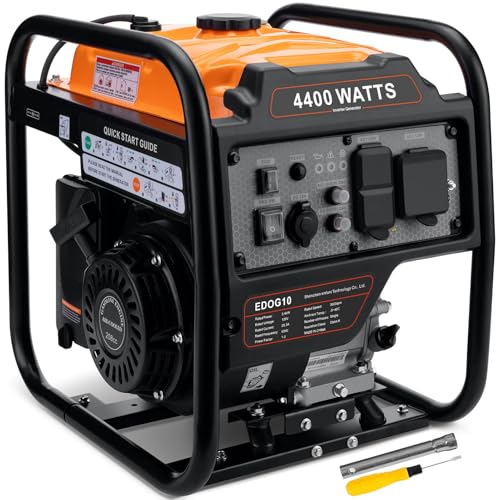
The Oxseryn 4400‑Watt Inverter Generator delivers reliable, clean power whenever you need it—whether it’s a weekend camping trip, an RV adventure, or an unexpected outage at home. With a peak output of 4,400 W and a steady 3,400 W running capacity, this compact unit powers essential appliances, lights, and electronics through two 120 V AC outlets, a 30 A RV plug, and a 12 V DC port. A 2‑gallon fuel tank provides up to 14 hours of runtime at a 25 % load, and the lightweight 56‑lb frame makes it easy to transport and store.
Built on inverter technology, the generator runs quietly and produces stable, low‑harmonic power that’s safe for sensitive devices. The ECO mode automatically adjusts engine speed for maximum fuel efficiency, while EPA‑compliant emissions keep your carbon footprint low. Additional safeguards—including overload protection, low‑oil shutdown, and cold‑start capability—ensure the unit runs smoothly in any condition.
Note: All Oxseryn generators are functionally tested at the factory, so a faint gasoline scent may be present on arrival.
Pros
- High power in a portable package: 4,400 W peak with only 56 lb weight.
- Versatile outlets: Two 120 V AC, one 30 A RV, and a 12 V DC port cover most needs.
- Fuel‑efficient & eco‑friendly: ECO mode and EPA‑compliant emissions extend run time and reduce environmental impact.
Cons
- Limited fuel capacity: The 2‑gallon tank may require frequent refueling for prolonged heavy loads.
- Slight gas odor on delivery: Normal after factory testing; dissipates after a short run‑in.
Buying Guide
When choosing an inverter generator for home backup, prioritize reliable power output, fuel efficiency, and quiet operation—features that keep essential appliances running smoothly during outages. Equally important are safety certifications and ease of maintenance, which ensure long‑term performance.
- Power capacity and surge rating – Select a model that delivers at least 2,500 W continuous power with a higher surge capacity to start motor‑driven devices like refrigerators and HVAC units.
- Fuel type and runtime – Opt for a generator that runs on gasoline, propane, or dual‑fuel with a runtime of 10 hours or more at half load, minimizing refueling interruptions.
- Noise level and portability – Look for decibel ratings below 60 dB(A) and built‑in handles or wheels for easy movement and discreet operation in residential neighborhoods.
- Safety features and certifications – Ensure the unit has automatic low‑oil shutdown, overload protection, and UL or CE certification for peace of mind.
- Warranty, support, and user reviews – A solid warranty (minimum 2 years) combined with positive customer feedback signals durable construction and responsive manufacturer service.
By weighing these factors, you can select an inverter generator that delivers dependable, quiet power while offering lasting value for home backup needs.
Frequently Asked Questions
Which inverter generator size is ideal for whole‑house backup?
A 5,000 – 7,000 W inverter generator is typically sufficient for most homes.
– 5,000 W can run essential circuits (refrigerator, lights, sump pump, a few outlets).
– 7,000 W adds capacity for larger loads like an electric furnace or central AC starter.
Choose a model with a continuous rating that exceeds your calculated load by at least 20 % to avoid over‑loading.
What features should I look for in the best inverter generator for home backup?
- True sine‑wave output – protects sensitive electronics and appliances.
- Fuel efficiency & long run‑time – look for ≥ 10 hours at 50 % load on a single tank.
- Automatic voltage regulation (AVR) – maintains stable voltage despite load changes.
- Quiet operation – ≤ 65 dB at rated load is ideal for residential neighborhoods.
- Easy start & transfer switch compatibility – electric start and a built‑in outlet panel simplify wiring to a manual transfer switch.
How do I determine the right generator brand and model for my home?
- Read independent reviews (e.g., Consumer Reports, Wirecutter) for reliability scores.
- Check warranty – reputable brands like Honda, Yamaha, and Generac offer 2‑year parts coverage and 1‑year labor.
- Verify service network – ensure local dealers can provide parts and maintenance.
- Compare price vs. features – the cheapest isn’t always the best; prioritize durability, fuel type (gasoline vs. propane), and noise level.
By matching your home’s power needs with these criteria, you’ll select the most dependable inverter generator for backup power.
Conclusion
When choosing an inverter generator for home backup, the most important factors are reliable power output, fuel efficiency, and quiet operation. A unit that can automatically adjust its engine speed to match the load will conserve fuel and extend run time, while built‑in safety features such as low‑oil shutdown and overload protection give peace of mind during extended outages. Portability and ease of maintenance also matter, as does the availability of clean‑energy options like solar compatibility. By weighing these criteria against your household’s power needs and budget, you can select a generator that delivers consistent, low‑noise electricity whenever the grid fails.